War, Nation and Europe in the Novels of Storm Jameson
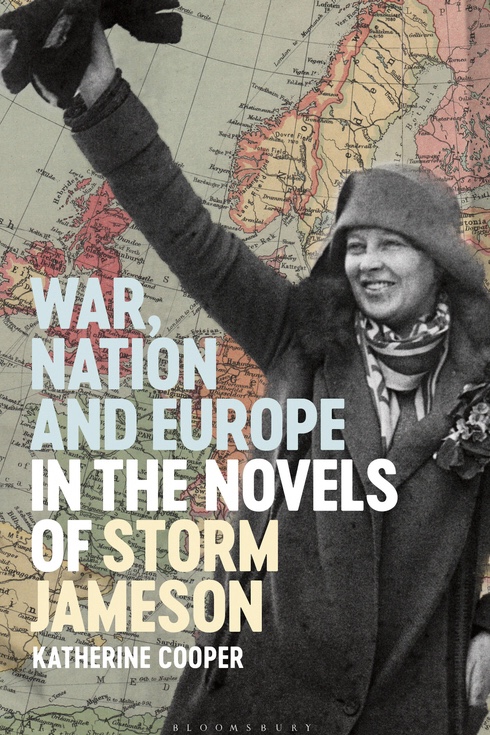
My latest book War, Nation and Europe in the Novels of Storm Jameson (Bloomsbury, 2020) uncovers the oft-neglected story of a writer who played a key role in the literary scene of the early and mid-twentieth century in Britain and whose work dealt with some of the biggest political questions of the time. Born in Whitby, Yorkshire, Storm Jameson was a fearsome advocate for equality – espousing socialism and fervently supporting pacifism until her deeply ingrained empathy dictated that Britain must intervene to stop the Nazis. An anti-fascist, she also worked to save countless European refugees as President of English PEN from 1938-1944. Her novels of the time spoke to her political concerns, ranging from the dystopian In the Second Year (1936) which imagined what a British fascist government might look like, the inconsistencies of socialism and communism at home and on the continent in The Moon Is Making (1937) and A Cup of Tea for Mr Thorgill (1957), the experience of occupation in Cloudless May (1942), of resistance in The Hidden River (1955), of victory and defeat in The Other Side (1946) and finally exploring the relevance of colonialism in an age of dying empires in Last Score (1962). Jameson confronted the issues of her time with characteristic vigour. My book explores her engagement with these issues through the prism of her sense of herself as a European and as a Yorkshirewoman, seeking to restore both the author and the books themselves to their rightful place in British literary history.
Praise for War, Nation and Europe in the Novels of Storm Jameson:
‘Cooper makes a detailed case; and her rich account of Jameson’s confrontations with hard issues, in hard times, will challenge a new generation of readers treading their own path between Britain and Europe’ – Jennifer Birkett, Emeritus Professor of French Studies at Birmingham University and author of Margaret Storm Jameson: A Life.
‘An astute and thoughtful study, focusing intelligently on the creative tension between Storm Jameson’s allegiance to ‘European’ humanist values and her Yorkshire conservatism, and on her perception of gender politics in relation to nationalism’ – Janet Montefiore, Professor Emerita of Twentieth-Century English Literature, University of Kent, UK
 Dr Katherine Cooper